Cover / The aircraft / Crew
Five in the dark
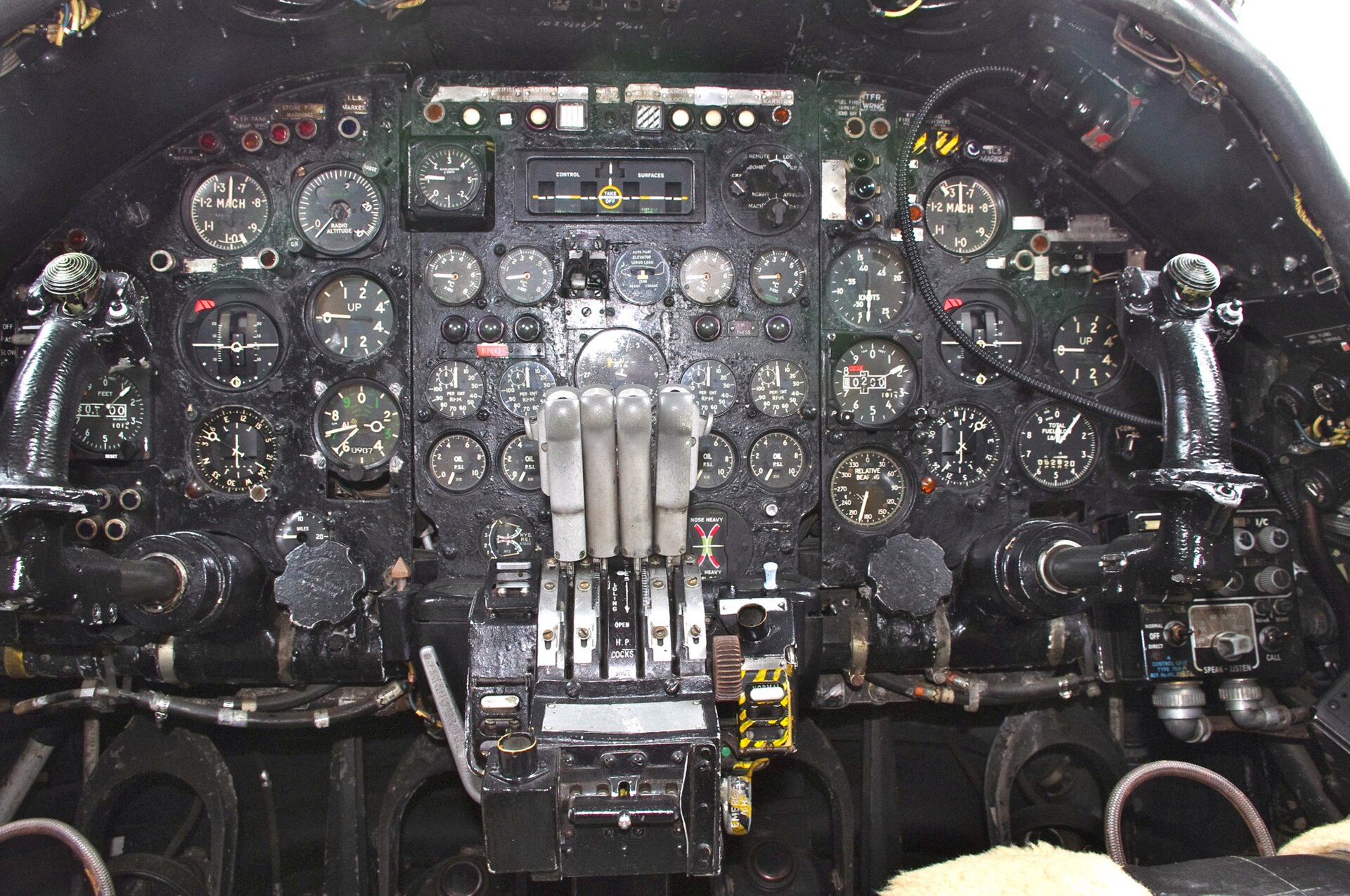
A Vulcan photograph taken through the windscreen lies by omission. The mission was not flown from that glass. It was flown from a set of rear-facing desks where three men sat without ejection seats, reading a radar picture, a chart, and a defensive electronic world that never appears in a sunshine snap. If you only visit the pilots' office, you have visited the advertisement.
Up front: captain and co-pilot, Martin-Baker seats, a delta that lands nose-high. The view is famous. The workload was less glamorous than the photographs: a heavy aeroplane, four engines, a nose that sits a long way above the runway on the approach. Aft, facing backwards in a compartment that is all bulkhead and instruments: Navigator Radar, Navigator Plotter, and the Air Electronics Officer. Escape for those three was the entrance door in the nose. At high level that sentence is uncomfortable. At low level it should make you stop walking. It made them uncomfortable. They still sat there. That is the crew story, and it is not a caption.
Who did what
Navigator Radar owned the H2S picture and the bombing problem — the Navigation and Bombing System that turned a ground map into a release. Navigator Plotter owned the chart, the clock, and the argument with the boxes when the radar picture and the planned track disagreed. The AEO owned the jammers, the warning receivers, and the tail-warning set in the cone: Red Steer watching backwards so that a fighter or a missile radar did not become a surprise. None of that work photographs well. All of it is why the aeroplane existed.
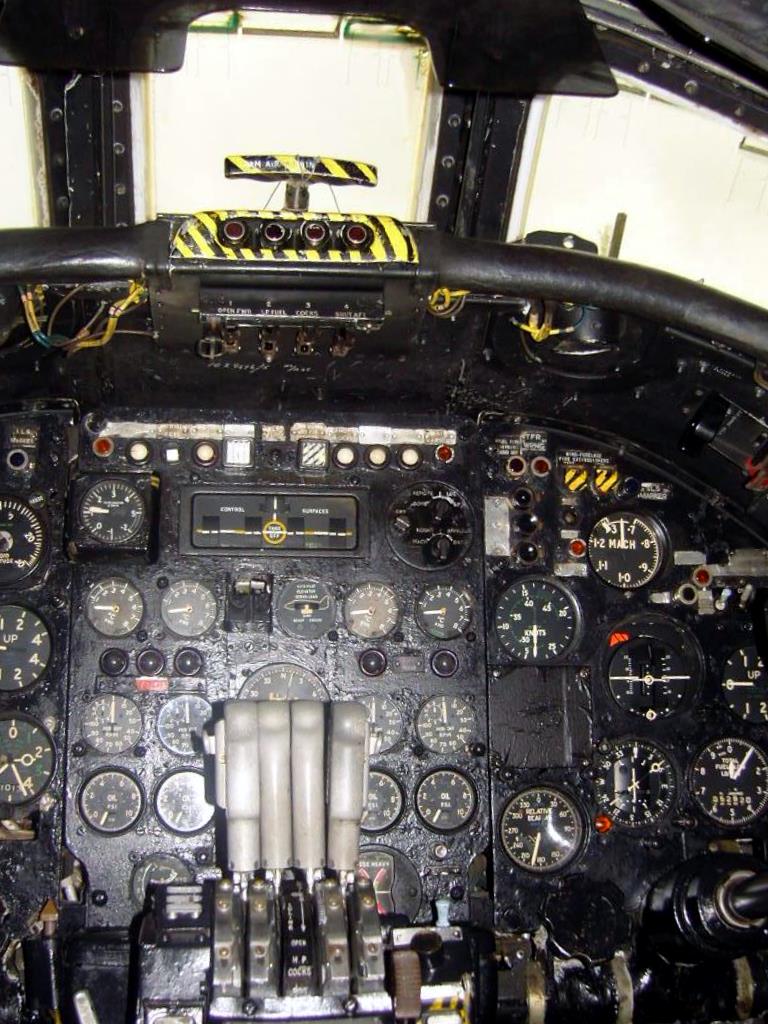
Ground-mapping H2S in the big nose radome fed NBS. A later thimble on some B.2s added terrain-following radar when the force went into the weeds, so the pilots could hold a clearance height in cloud instead of hoping. The tail cone watched the other way. We are not going to reprint a wiring diagram. The point for a reader standing under a wing is simpler: this was a microwave aeroplane with a famous planform, not a famous planform with some aerials glued on afterwards.
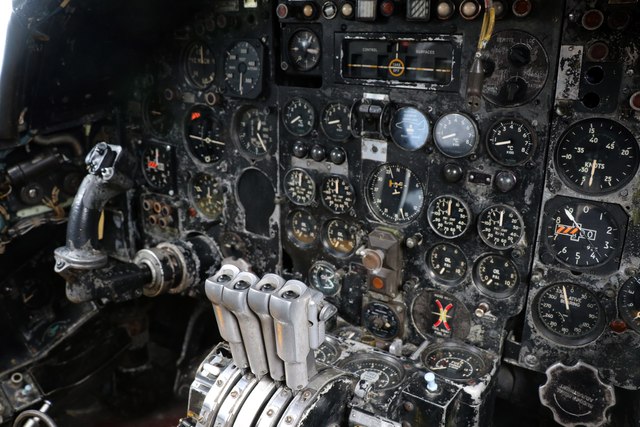
If you only visit one interior, try to see a rear cabin, not just the pilots' office. Cosford, Hendon and a few cockpit sections will let you look at the dark. The dark is where the work was. For the years those five men spent sitting on QRA rather than flying into documentaries, read Sitting QRA.