Cover / The aircraft / Airframe
The airframe, not the nickname
If you only know the Vulcan from airshow posters, you know a silhouette. The interesting object is the structure behind it: a single enormous wing with four turbojets buried in the roots, a fuselage that is mostly bay and offices, and a nose that exists because radar and a probe had to live somewhere. Nickname last. Machine first.
Specification B.35/46 asked British firms for a jet bomber that could carry a nuclear store a very long way, very high. Avro's answer, Type 698, threw away the tailplane. A thin, highly swept delta promised lift in thin air, room for fuel, and a place to hide engines without a forest of pods. Roy Chadwick sketched the idea; after his death in 1947 Stuart Davies made it buildable. The little Avro 707s — 707B, 707A, the two-seat 707C — were the cheap way to find out whether a hundred-foot delta would still talk to the pilot at landing speed. They were not mascots. VX770, the first Type 698, flew from Woodford on 30 August 1952. The shape on the poster is that aeroplane, grown up.
Two marks that matter
The B.1 that reached the RAF in 1956 was already a serious bomber: four Olympus, a five-man crew, a bay that could take a British nuclear store or a stick of conventional bombs. The B.2 that followed from 1960 is the one most of us meet in a car park. More span. A kink in the leading edge. Hungrier engines. An electrical system that could feed the growing pile of boxes in the tail. Early B.2s kept relatively narrow intakes; from XH557 the mouths deepened because the next Olympus marks were going to need the air. If you are identifying a photograph, look at the intake first, the tail cone second, and the paint last. White is early high-level thinking. Grey-green uppers mean the force has gone into the weeds.
Production stopped at 136 including prototypes. That is not a large family by American standards. It is large enough that serials still turn up in unexpected fields, and small enough that every complete survivor has a name in the community. Almost every visitor airframe is a B.2. The B.1s were consumed by the career they had: training, conversion, and the early deterrent years. If someone tells you they sat in a B.1 last Saturday, ask which museum, politely.
| Type | Avro 698 Vulcan, later Hawker Siddeley |
|---|---|
| First flight | 30 August 1952, VX770, Woodford |
| Crew | Five: two pilots, two navigators, one AEO |
| Useful distinction | B.1 then B.2; almost every visitor airframe is a B.2 |
| How to read a photo | Intake depth, tail cone, then paint |
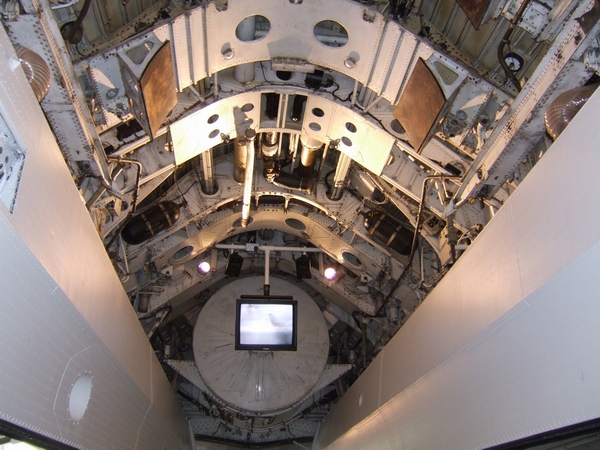
The bay is the other fact posters omit. It is the size of a shop, uninterrupted, which is why the type could take Blue Steel, then a conventional stick for Stanley, and later a hose as a stopgap tanker. For the noise that airframe made, skip to Olympus. For the people who sat in it, five in the dark. For why the wing has no tailplane, the essay is here.