Cover / Journal / Delta
A wing without a tail
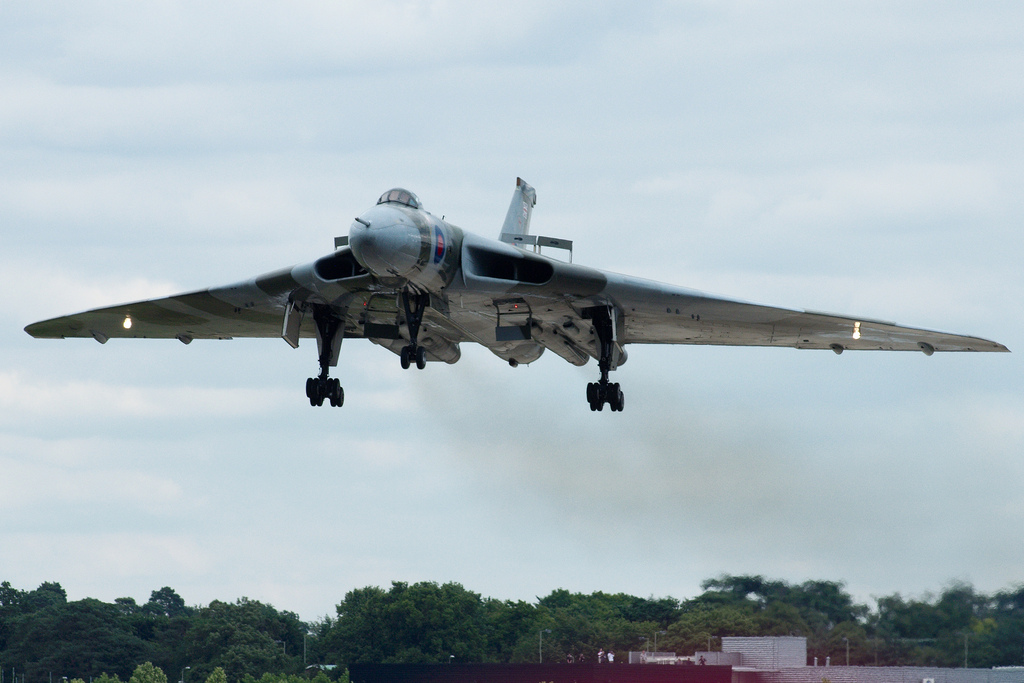
Fashion did not design this aeroplane. Volume did. A high-altitude bomber needed area for lift in thin air, sweep to delay the drag rise, and somewhere to bury four jets and a ridiculous quantity of fuel. A pure delta is one thought that does all three. The cost is at the other end of the speed range: you fly the approach at an attitude that still startles people on film, and you do not have a conventional tailplane to trim with. Elevons along the trailing edge do the work a separate tail would have done. The wing is the aeroplane.
Roy Chadwick sketched that idea at Avro; after his death in 1947 Stuart Davies made it a thing you could rivet. The little Avro 707 research aircraft were not mascots for airshow crowds. They were the cheap way to find out whether a hundred-foot delta would still talk to the pilot at landing speed. It did, with manners that took learning. The B.1 that reached the RAF in 1956 already looked like the poster. The B.2 then grew the span, put a kink in the leading edge, and opened the intakes because weight, electronics and hungrier Olympus engines kept arriving. A fighter delta is a different argument — small, furious, short of fuel. This is a flying tank farm with a crew compartment glued on the front.
What the wing was for, and what it became
The original job was height. Get above the fighters, stay there, drop a store, come home. Surface-to-air missiles made that look like an appointment. The same wing then had to live at treetop height, in turbulence it had not been sold with, carrying a terrain-following radar in a thimble and a tail full of jammers. A large planform is also a large radar reflector. You cannot hide a Vulcan. You can only be somewhere awkward, briefly. Low-level tactics existed because the beautiful wing was a billboard.
Landing still looks wrong if you grew up on Boeings. The delta arrives nose-high, the undercarriage a long way below the cockpit, the wing blanketing the runway. Display pilots later showed it could still be theatre — steep bank, howl, a pass that made a car park go quiet. Service pilots flew it as a bomber, which is less photogenic and more honest. The 707s had already paid for that honesty in the 1950s. Woodford was not guessing on the day VX770 first left the ground.
We keep the nuts and bolts, serials and intake shapes, in the airframe. This page is the argument: Avro did not pick a delta to look fashionable at Farnborough. It picked a delta because height, fuel and four buried engines needed a single thought of a wing. The unromantic reading is the one that lasts. The romantic reading is why you are still looking.